NSTC Sustainable Development
Policy, research and field work organized into an understandable sustainability narrative.
Project brief
04 / 20- Client
- National Science and Technology Council
- Type
- Public service
- Period
- 2026
- Status
- In acceptance review
- Collaboration
- 臻果資訊有限公司 (project partner)
- Scope
- Individual contracted/advisory participation: planning, information architecture, content structuring, visual design, infographics and frontend
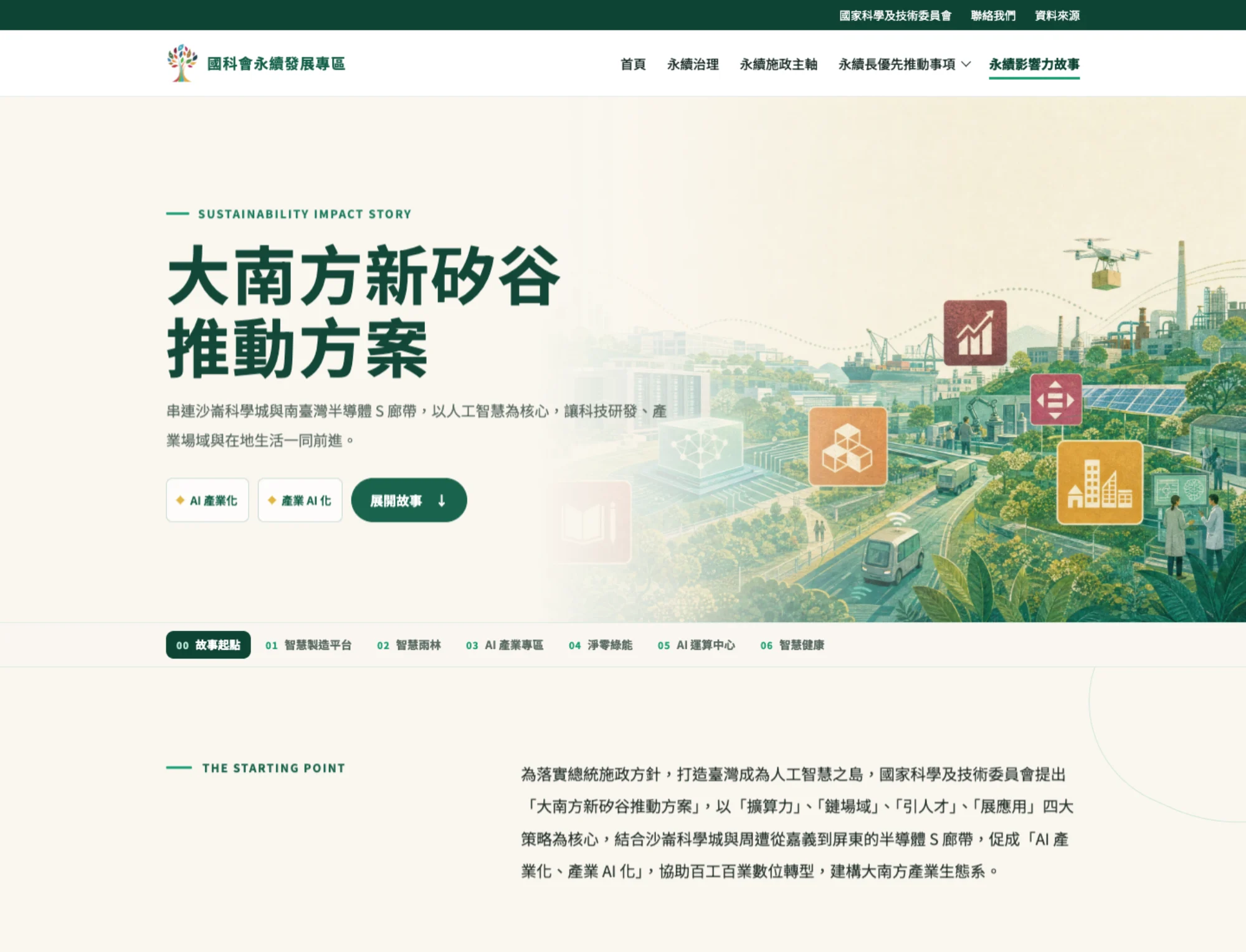
Project overview
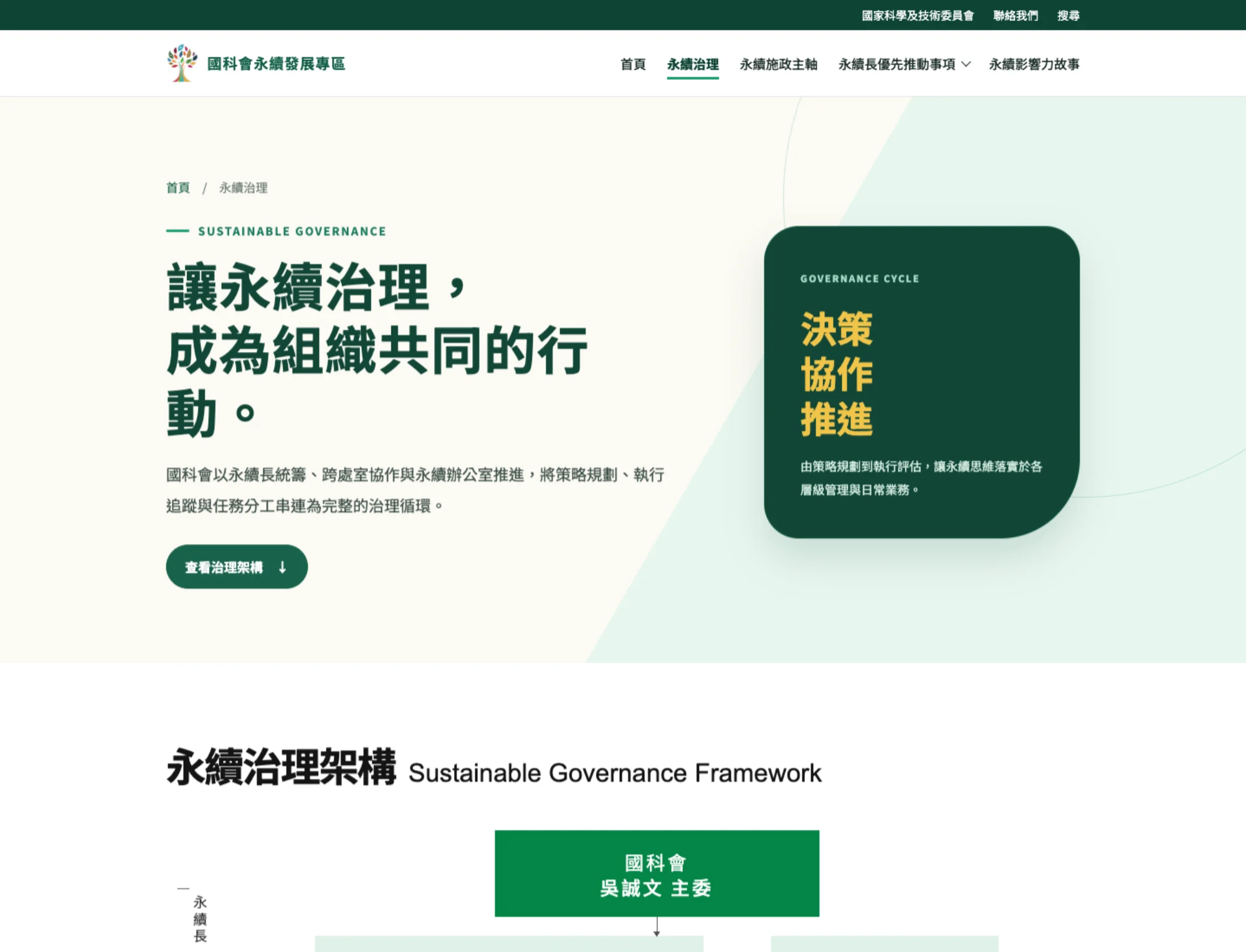
The sustainability site brings policy, research, field work and programs into one public narrative that people can understand.
Planning, visual design and frontend development form a reading structure capable of carrying a large collection of information.
Key outcomes
Working flow
Structure the material before designing the page.
- 01 Source material
Policy, research and existing articles are organised from supplied material.
- 02 Reading structure
Summaries, editing, maps and infographics turn the material into navigable content.
- 03 Acceptance
Accessibility, security, browser and review requirements are checked through delivery.
Giving different kinds of information a shared structure
Researchers, policy teams and the public approach the material differently. Themes, places and actions provide multiple entry points without requiring prior knowledge of the full policy structure.
From policy direction to field action
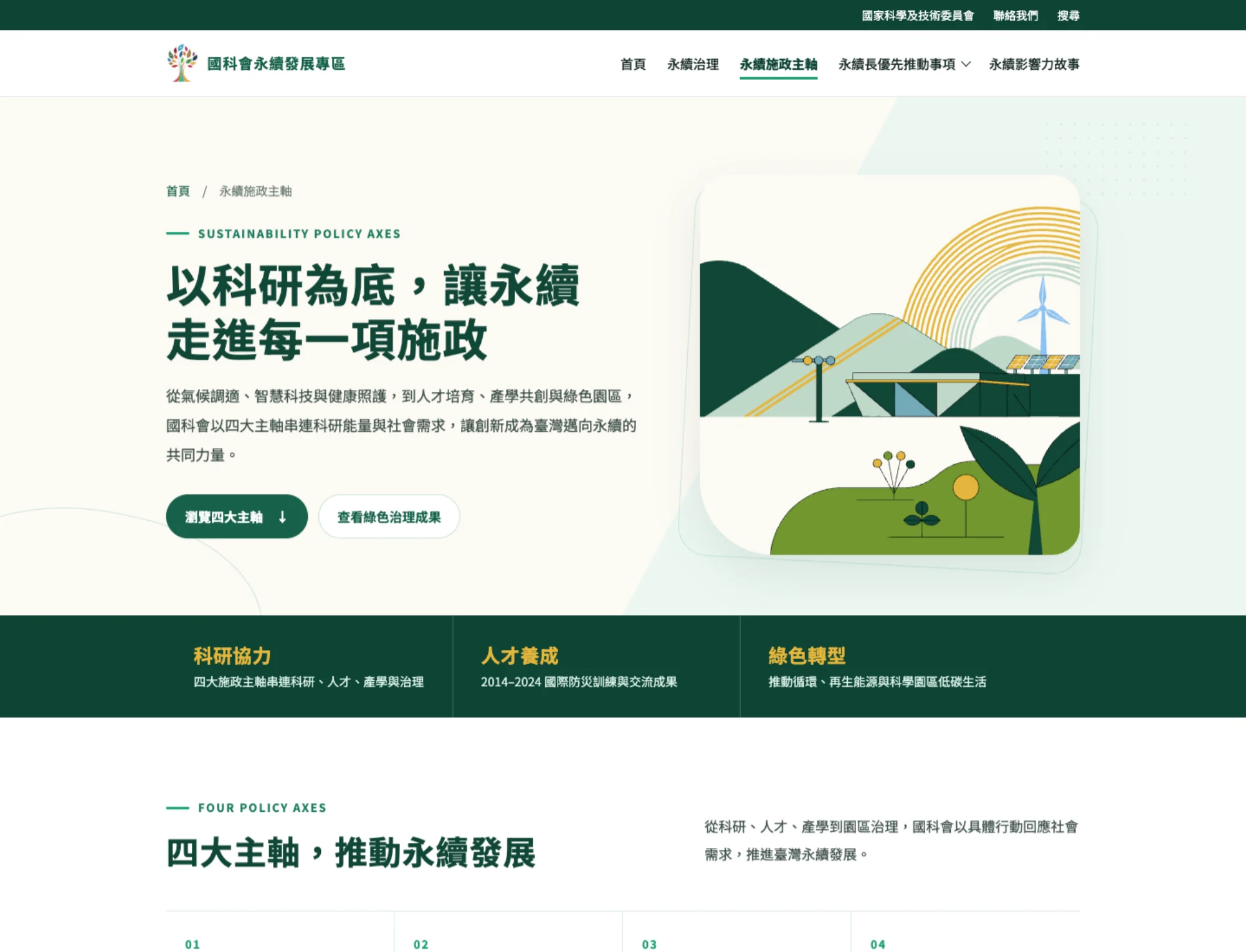
Maps, data graphics and chapter pacing lead from broad direction into research, governance and field outcomes. Interaction supports comprehension without competing with the content.
The content model starts with how a public reader enters the subject.
Policy direction, projects, places and research were organised as different entry points so visitors can begin with a question rather than needing prior knowledge of the whole programme.
Long-form public information needs its own visual method.
Editorial hierarchy, generated infographics and image-text composition were used to make supplied material readable without simplifying away its source context.
Next case
LOVE&SAKE AI Assistant →